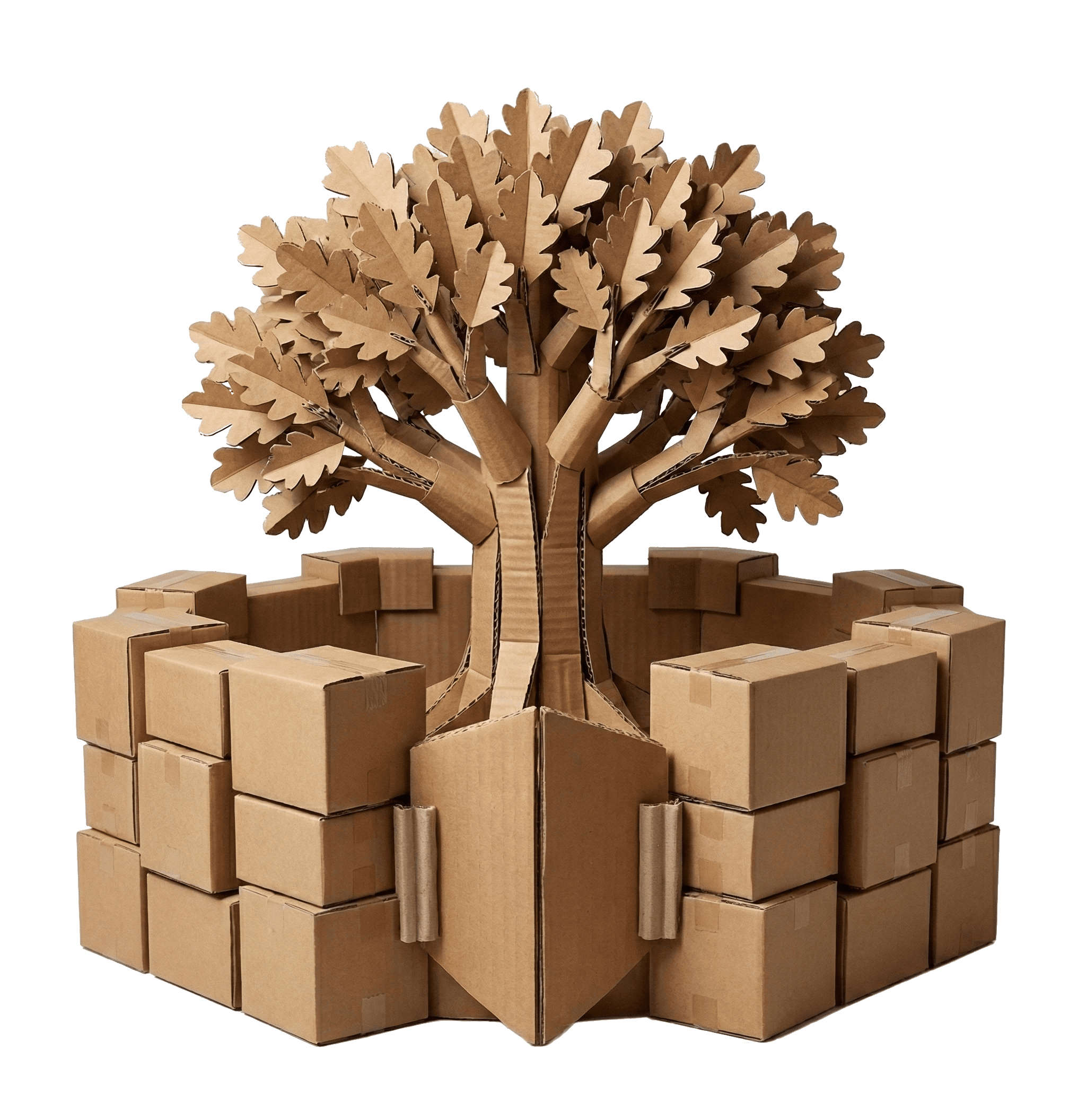
What is the real impact of reusing cardboard boxes?
"A Re-used box is more sustainable and cost-effective": we say it often on our site. But what does "more sustainable" actually mean in concrete terms? Below, you will find the exact savings figures, and you can use our tool to see what you have already saved by choosing Re-used boxes.
A box ready for another round
By using a box just one more time, you ensure that one less box needs to be manufactured. Cardboard is already one of the most sustainable packaging materials available. However, producing new cardboard still requires raw materials, energy, and water, and that is exactly where the biggest gains can be made through reuse.
Ready-to-use for your sustainability reporting
Our savings figures are fully substantiated per unit and traceable to European industry data, allowing you to seamlessly integrate them into your sustainability and Scope 3 reporting. Verifiable data, zero guesswork.
The figures: what is being saved?*
The table below shows exactly what an average reused box saves at RENUBOX. The larger the box, the greater the savings. These figures are based on the average weight of a box processed by RENUBOX.
* The detailed calculations, sources, and explanations can be found in the whitepaper: Reuse of Corrugated Cardboard Packaging.
The savings explained
The numbers above might already tell you enough for now. But do you want to know the story behind them? Below, we briefly explain each type of saving.
CO₂ savings
Water savings
Trees saved
Social savings
According to research, global warming brings significant hidden costs to society. Think of damage caused by extreme rainfall and droughts, or increased hospital admissions during extreme heatwaves. For every 100 boxes reused, €2.70 in social and environmental damage is prevented.
Want to dive deeper into the data? View the whitepaper
Calculate your contribution
Enter the number of boxes below to instantly see your environmental impact.
Choose Re-used or Surplus if:
Why pay more when you can go green?